

A.LFK reassessed
Pocket spring systems shape large parts of today’s mattress market. Still, there are applications where a different system logic can be relevant. A.LFK, AGRO’s LFK innerspring, is not a universal replacement for established systems – but it is an interesting solution for mattress concepts where flexibility, airflow, dimensional stability and material logic play an important role.
Why the LFK innerspring is relevant again today
The requirements for modern mattresses are changing. Comfort, ergonomics and durability remain key factors. At the same time, topics such as material efficiency, recyclability, airflow, processing and application reliability are becoming increasingly important.
Today, large parts of the market are shaped by pocket spring systems. They offer many advantages, especially when it comes to point-elastic comfort, zoning and differentiated comfort designs. For many mattress concepts, they are therefore the established and appropriate solution.
Still, there are applications where a different system logic can make sense. This is where it is worth taking a renewed look at A.LFK, AGRO’s LFK innerspring.
A.LFK has been part of our portfolio for many years. Historically, the system was often viewed in relation to its position between classic Bonnell innersprings and pocket spring systems. Today, this purely price-based perspective is no longer sufficient. Under current market requirements, other characteristics are coming into focus: open structure, flexibility, dimensional stability and reduced material complexity.
What is A.LFK?
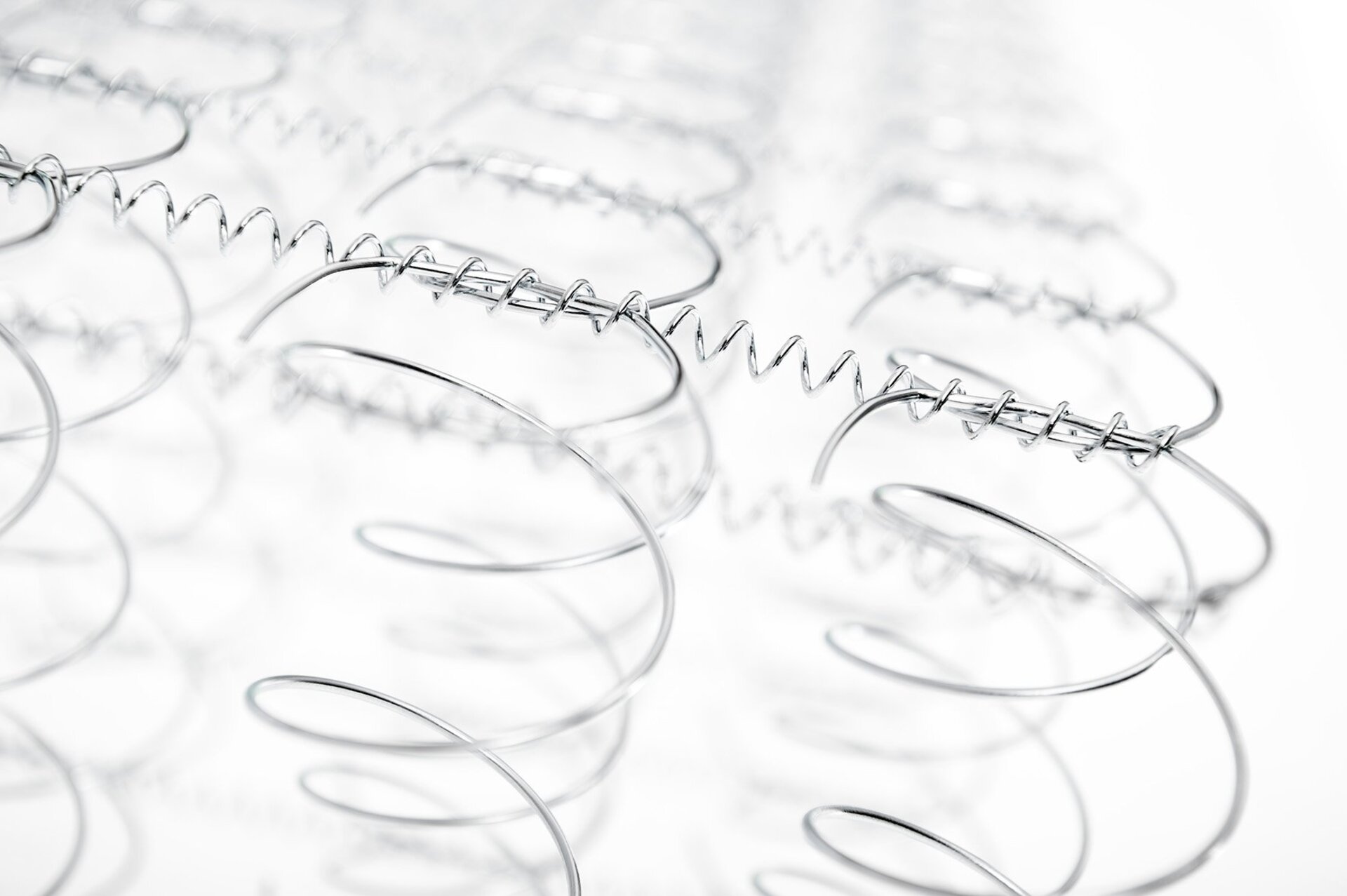
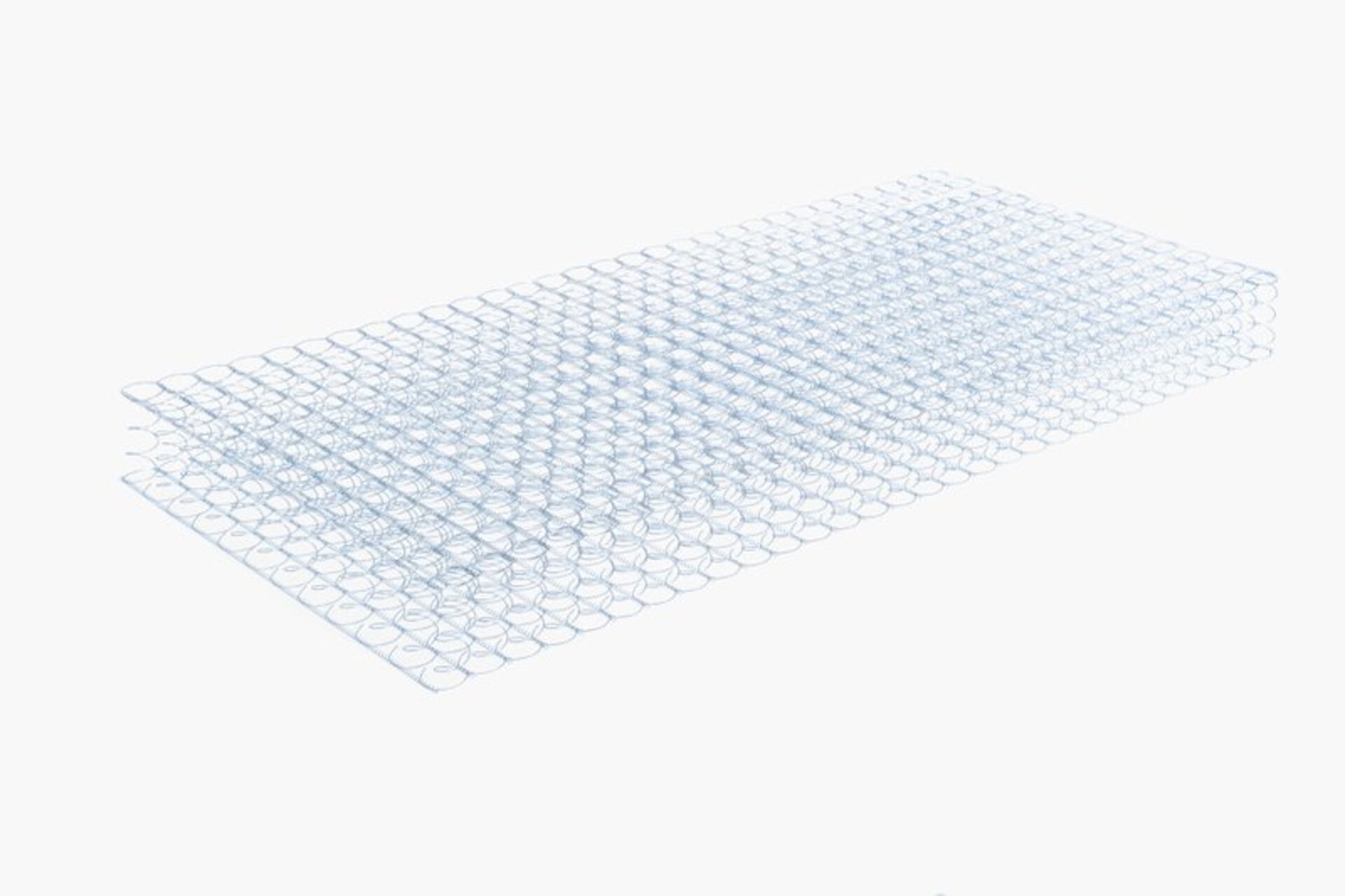
A.LFK is an LFK innerspring for mattress applications. Unlike pocket spring systems, the individual springs are not sewn into textile pockets. Instead, the function is created through the open spring structure and the interaction of wire, spring geometry and overall system design.
This construction creates its own balance of support, flexibility, air permeability and material use. A.LFK is therefore not a system that simply replaces classic pocket spring solutions. Rather, it is an independent solution for specific mattress concepts and applications.
1. Open structure: airflow as a technical advantage
One key advantage of A.LFK lies in its open structure. Since the system does not use textile pockets, the innerspring remains highly permeable. Air can circulate more freely inside the mattress.
For mattress manufacturers, this characteristic can be relevant in different concepts. Good ventilation supports a more balanced sleeping climate and can be particularly interesting where moisture management, temperature regulation or an airy mattress construction play a role.
This does not mean that A.LFK should be seen as the sole solution for sleeping climate. Sleeping climate is always created by the interaction of all materials and layers in a mattress. However, the innerspring can make an important contribution – especially when an open and air-permeable construction is desired.
2. Flexibility: when the innerspring needs to work with the mattress
Not every mattress remains flat and static throughout its use. In adjustable bed systems, healthcare applications or hospitality concepts, flexibility and adaptability can play an important role.
A.LFK offers a specific system logic here. Thanks to the open structure and the flexible interaction of the springs, the core can respond well to movement. This makes it interesting for applications where the mattress construction needs to react to adjustment, bending or changing loads.
In this respect, A.LFK clearly differs from classic zoned pocket spring concepts. Its strength does not lie in maximum point-by-point differentiation, but in a broadly flexible, adaptive system structure. For certain applications, this can be the decisive advantage.
3. Dimensional stability: relevant for handling, transport and use
In addition to comfort and flexibility, dimensional stability also plays an important role. An innerspring must not only perform in the finished product. It also needs to remain reliable during processing, handling, transport and throughout its service life.
A.LFK can support good dimensional stability through its system structure. For mattress manufacturers, this is particularly relevant when defined dimensions, stable edge behavior, reliable processing or predictable performance in the mattress construction are required.
Especially in industrial production processes, theoretical product characteristics are not enough. What matters is whether a system also works reliably in real manufacturing environments.
4. Reduced material complexity: a contribution to recyclability
The recyclability of mattresses is becoming increasingly important. However, recycling does not begin at the end of the product life cycle. It begins with system design.
A.LFK can make an interesting contribution here because the system is based mainly on steel and does not require textile pockets. This reduces material complexity within the innerspring. For recycling-oriented mattress concepts, this clarity in material structure can be an advantage.
A realistic perspective is important: the recyclability of a mattress always depends on the entire product construction – including all layers, adhesives, textiles, foams and joining technologies used. A.LFK cannot solve this process on its own. But it can be one building block in a more circular mattress concept.
5. Wire, geometry and system design: the technical basis matters
The performance of an LFK innerspring is not determined by a single feature. What matters is the interaction of wire quality, wire gauge, spring geometry, coil count, spring diameter, core height and overall construction.
Even small differences in design can significantly influence the behavior of the system. Support, comfort, response behavior, durability and flexibility are strongly influenced by the way the innerspring is engineered.
That is why we do not look at A.LFK as an isolated standard component, but always in relation to the specific application. What mattress height is planned? Which comfort layers will be used? Will the mattress be used in an adjustable bed? What requirements exist regarding processing, transport, roll-packing or recycling? Only these questions lead to a meaningful technical evaluation.
Where A.LFK can be particularly interesting
A.LFK is not a universal solution. That is precisely where its strength lies. The system is particularly interesting when the requirements of a mattress concept match its specific system logic.
Relevant fields of application can include:
- adjustable bed systems where flexibility and adaptability are required
- healthcare applications where function, ventilation and reliable support play an important role
- hospitality concepts where robustness, handling and consistent performance matter
- sustainability-oriented mattress concepts with a focus on reduced material complexity
- product developments where open structure, airflow and dimensional stability are deliberately used
In these applications, A.LFK can be a technical alternative that is not defined by maximum point elasticity, but by a different balance of function, material logic and industrial feasibility.
A.LFK compared to established innerspring systems
A realistic view of A.LFK also means clearly naming its limits. For mattress concepts where highly differentiated zoning, high point elasticity or strongly individualized comfort profiles are the main focus, pocket spring systems are often the more suitable solution.
A.LFK plays to its strengths where open structure, flexibility, air permeability, dimensional stability and reduced material complexity are more relevant than maximum point-by-point differentiation.
So the question is not: Which system is generally better?
The decisive question is: Which system fits the application?
Why AGRO is reassessing A.LFK
As an international innerspring manufacturer, we do not evaluate systems based on a single product characteristic alone. For us, what matters is the interaction of market requirements, product design, production, material use and application.
A.LFK is a good example of this. The system has been known for many years, but under today’s requirements it is gaining new relevance. Not as a nostalgic return to earlier innerspring logic, but as a technically interesting option for specific requirements in modern mattress concepts.
With A.LFK, we offer mattress manufacturers a solution that deliberately works differently from classic pocket spring systems. It opens up possibilities where reduced material complexity, airflow, flexibility and dimensional stability are required.
Conclusion: Not universal. But relevant.
A.LFK is not a replacement for all established innerspring systems. And that is exactly why a differentiated evaluation matters.
For many mattress concepts, pocket spring systems remain the right choice. For other applications, however, A.LFK can be an interesting system solution – especially where open structure, adaptive flexibility, reduced material complexity and industrial feasibility are in focus.
The future of mattress construction does not lie in one single system answer. It lies in the right solution for the right application - like A.LFK, the light-weight innerspring from AGRO.
